- SETTING
- Hospital FMT laboratory
- PROCESS
- Closed, automated
- OUTPUT
- Acid-resistant capsules
- STATUS
- In development
-
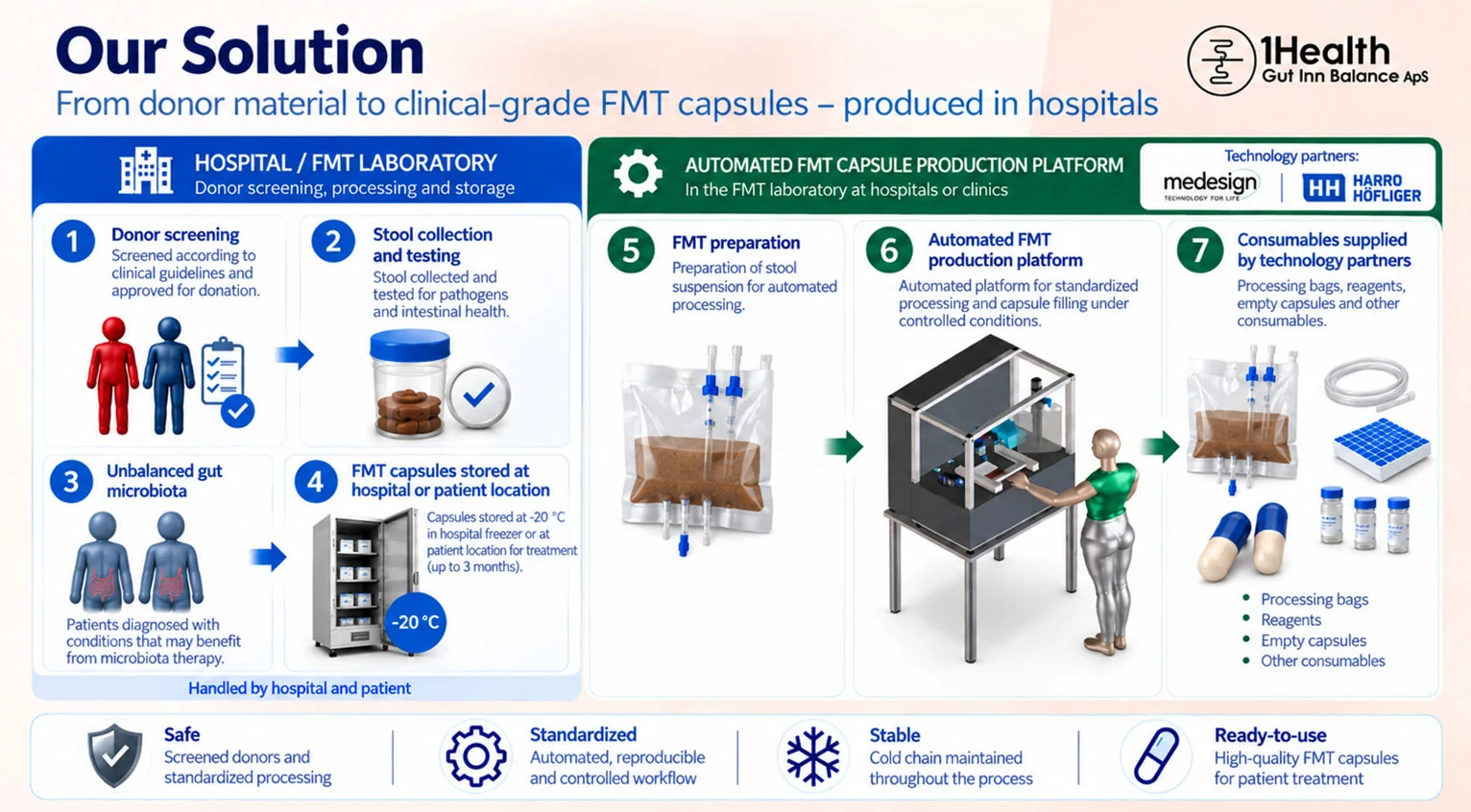
Donor screeningDonors are screened and selected according to clinical guidelines.
Suitable stool donors are screened according to clinical guidelines and approved for donation.
Screening includes- Medical history
- Physical examination
- Infectious disease testing
- Microbiome and virome characterization
-
Collection & testingStool is collected and tested for pathogens and intestinal health markers.
Stool is collected and tested for pathogens and intestinal health markers before it enters production.
Laboratory testing- Bacterial pathogens
- Viral pathogens
- Parasites
- Blood-borne infections
- Additional safety screening
- Intestinal health markers (microbiome and virome)
-
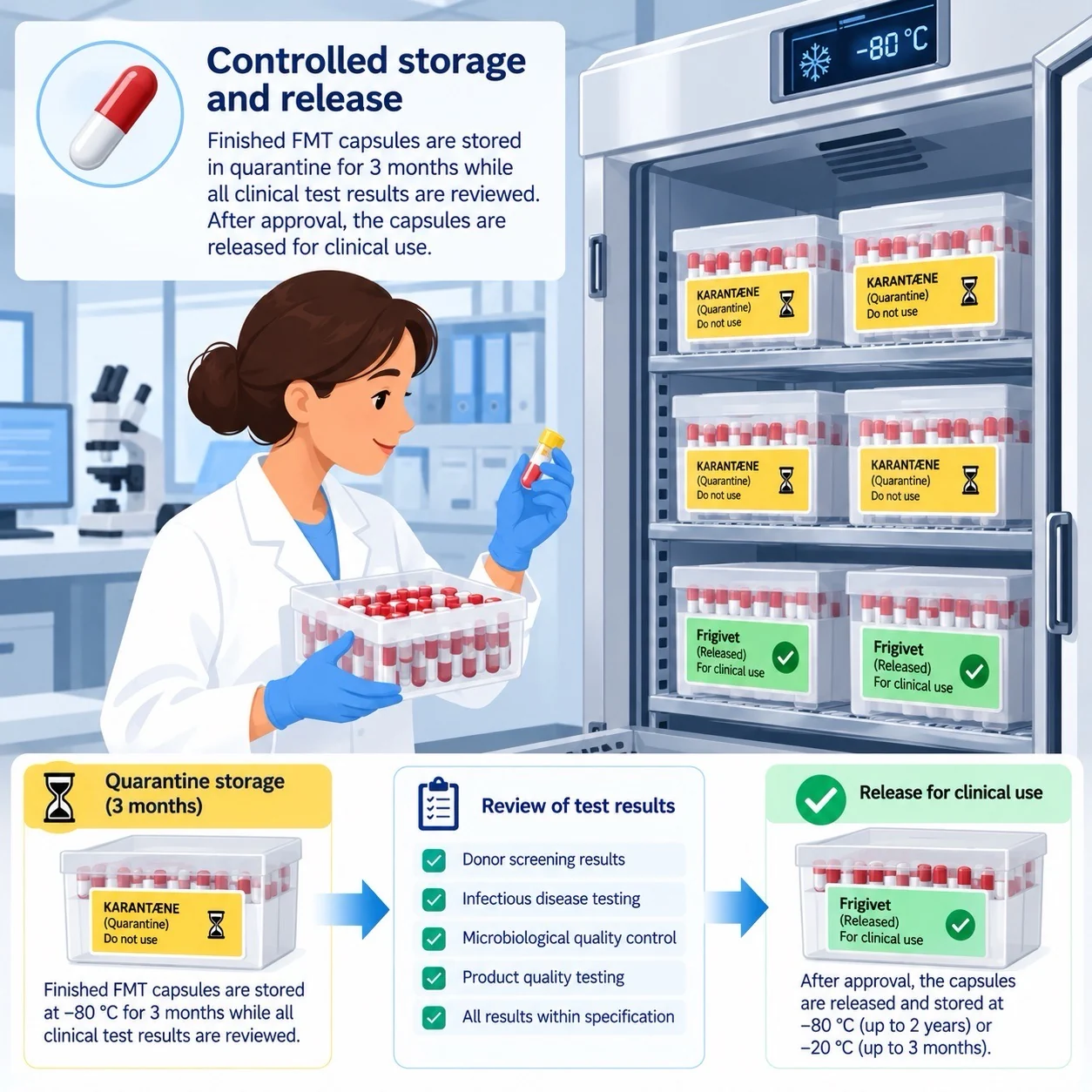
Controlled storage & releaseCapsules are held in quarantine until all test results are approved.
Finished FMT capsules are stored in quarantine for 3 months while all clinical test results are reviewed. After approval, the capsules are released for clinical use.
Quarantine storage- Stored at −80 °C for 3 months while all clinical test results are reviewed
Review of test results- Donor screening results
- Infectious disease testing
- Microbiological quality control
- Product quality testing
- All results within specification
Release for clinical use- Stored at −80 °C (up to 2 years) or −20 °C (up to 3 months)
-
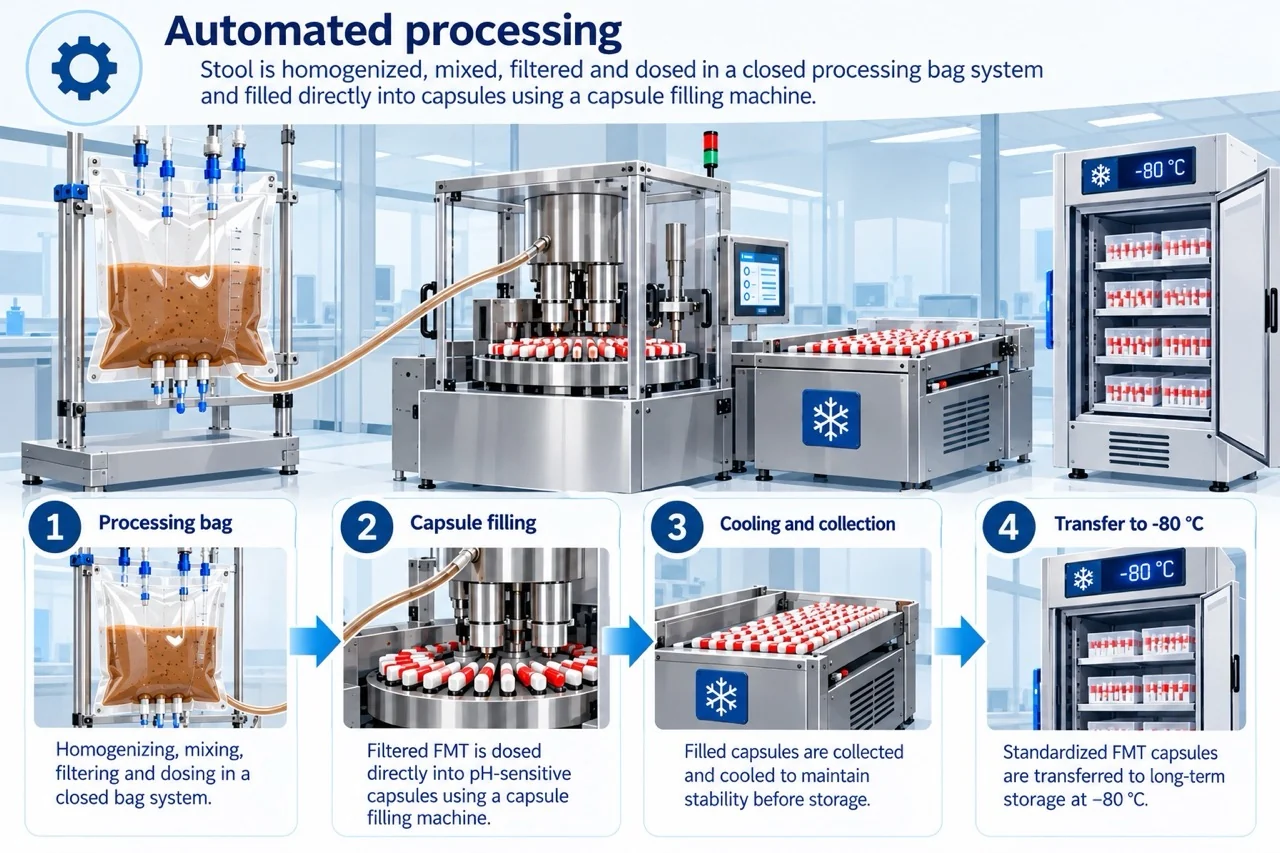
GUT IN BALANCEAutomated processingProcessing and capsule filling in one closed, automated system.
Stool is homogenized, mixed, filtered and dosed in a closed processing bag system and filled directly into capsules using a capsule filling machine.
The process- Processing bag — homogenizing, mixing, filtering and dosing in a closed bag system
- Capsule filling — filtered FMT is dosed directly into pH-sensitive capsules
- Cooling and collection — filled capsules are cooled to maintain stability
- Transfer to −80 °C — capsules move to long-term storage
-
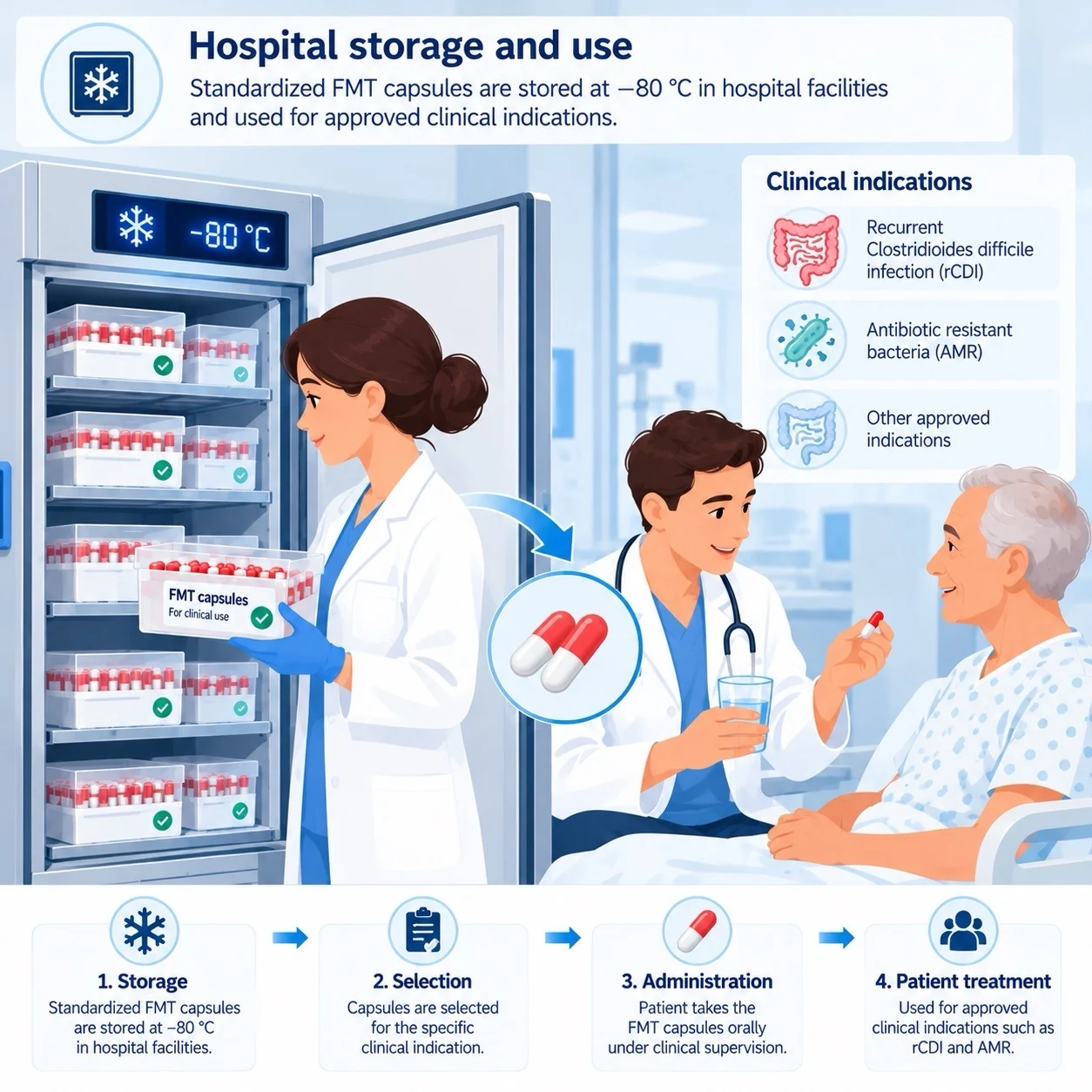
Hospital storage & useCapsules are stored at −80 °C and used for approved clinical indications.
Standardized FMT capsules are stored at −80 °C in hospital facilities and used for approved clinical indications.
From freezer to patient- Storage — capsules are kept at −80 °C in hospital facilities
- Selection — capsules are selected for the specific clinical indication
- Administration — the patient takes the capsules orally under clinical supervision
- Patient treatment — used for approved indications such as rCDI and AMR
Clinical indications- Recurrent Clostridioides difficile infection (rCDI)
- Antibiotic resistant bacteria (AMR)
- Other approved indications


Production hardware and automation.
Automated equipment for controlled processing and standardized capsule filling inside the hospital laboratory.
Bags, reagents, filters and tubing.
Dedicated single-use materials that support closed, controlled handling of donor material.
Capsules and filling components.
Acid-resistant capsules and filling materials designed for controlled oral delivery.